Demat Account
Why open demat account with VProfecto?
 Customized Investment Plans with one click Investment
 Personal Advisor / Advisory for Customers
 High tech 4-star apps for traders & Investors
 Wide Choice of Assets Classes to Invest In
FAQs on Demat Account:-
1. What is demat account and what are the types of demat account?
A Demat account is an account that holds financial securities in electronic form. In India, Demat accounts are maintained by two depository organisations, NSDL (National Securities Depository Limited) and CDSL (Central Depository Services Limited).
Types of Demat Account:
Regular Demat Account: For the investors/traders who reside within India.
Repatriable Demat Account: For the NRIs. Funds can be transferred abroad. It requires an associated NRE bank account.
Non-Repatriable Demat Account: For the NRIs. The fund cannot be transferred abroad. It requires an associated NRO bank account.
2. What are the benefits and uses of demat account?
A Demat account helps keep your equity investments, your mutual fund units, bonds, and other financial assets safe and secure in an online electronic environment. With a Demat and trading account, you can not only invest in upcoming IPOs of companies but also start a mutual fund, digital gold and SIP as well.
Here's a quick look at some of the other uses of a Demat account:
Enables easy and quick share transfers.
Highly secure storage with zero risk.
Can be accessed at any time from anywhere through the internet.
Very less paperwork involved.
3. Who can open a demat account?
Any individual resident of India, HUF, NRI, proprietary firm, partnership firm or company can open a Demat and trading account with VProfecto.
4. What are the documents required to open a demat account?
With VProfecto, the documents for Demat account opening that you need to submit is minimal.
Here's the list:
Duly filled Demat account opening application form.
Duly filled KYC application form.
A passport-sized photograph.
A photocopy of your PAN card.
A photocopy of your proof of identity & address, which can be anyone of the following. (Aadhaar Card, Voter's ID, Passport or Driving license)
5. What are the demat account opening charges?
With VProfecto, you don't have to pay any Demat account charges for opening an account. That's not all. In addition to being able to open a Demat account for free, you also get to enjoy zero Account Maintenance Charges (AMC) for life. What's even more exciting is that you can do it online from the comfort of your own home.
6. What is the minimum amount required to open a demat account?
With VProfecto, there's absolutely no requirement of having to put up a minimum amount for demat account opening. You can open a demat account with us for free!
7. Can I open two/multiple demat account?
Of course. You can open multiple Demat accounts under your name as long as the Demat accounts are not with the same Depository Participant (DP). For instance, if you already have a Demat account with another DP and wish to open another one with VProfecto, you can do so.
8. How to open a paperless online demat account?
Opening an online Demat account with VProfecto is very easy:
Follow these steps:
Visit our website.
Click on 'Open Demat Account'.
Enter the mobile number and submit the OTP you received.
Enter the email ID and proceed.
Complete the EKYC (Upload all necessary documents like PAN Card, Aadhar Card, Bank Details etc.)
Add personal details.
After verification perform e-sign in.
Demat account activated.
9. Can a demat account be opened in the name of Joint Holders?
Yes, a demat account can be opened in single or joint names. However, a demat account can have a maximum of three account holders - 1 main holder and 2 joint holders.
10. Can an NRI open a demat account in India?
Of course. It is certainly possible to open a Demat account for NRIs through VProfecto. But to do so, you will have to possess either an NRO or NRE bank account and submit a Portfolio Investment Scheme letter of approval from the Reserve Bank of India along with your Demat account application form and other supporting documents.
Trading Account
Opening a Trading Account
The first step for stock market trading is to open a Demat Account and a Trading Account. Once you open a Demat Account online, you can hold all your stocks and securities here. Be it bonds, Exchange-Traded Funds (ETFs), mutual fund units, and more, every asset or security is stored here in the digital format. Now when you want to purchase and sell these securities, you can place a purchase or sell order only through your online Trading Account. So essentially you need to have a Trading Account to transact in the stock market. Any profit or loss from the transactions is accordingly credited or debited from a linked bank account.
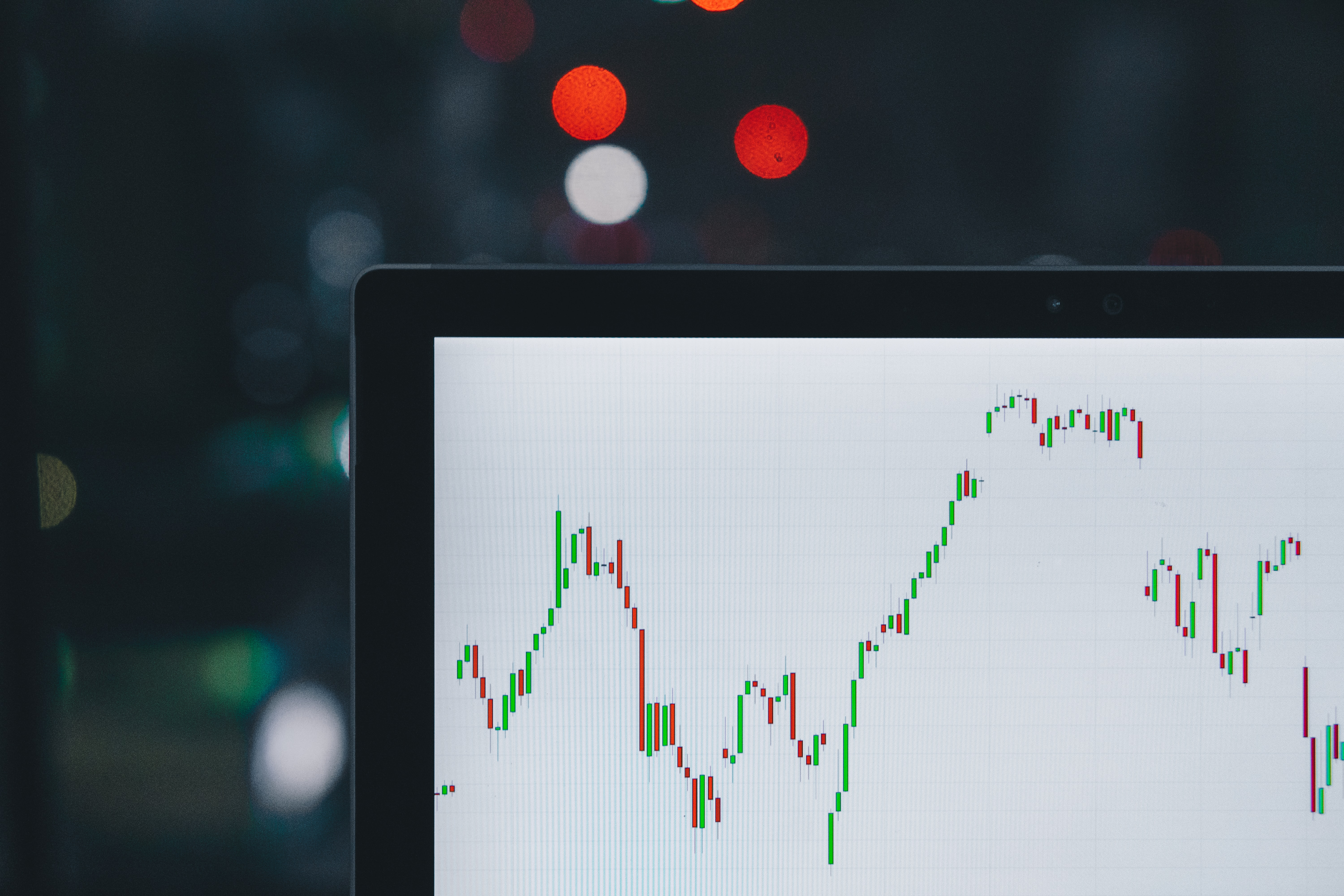
A Trading Account can be defined as the account that allows you to purchase or sell stocks and securities across stock markets in the country. The key advantage of an online Trading Account is the convenience and ease of carrying transactions. You can transact online from the comfort of your home or office, or even while on the go. Besides, you don’t need to worry about any safety issues as all your transactions are encrypted and secure.
Here, you must remember that you cannot directly approach a depository, either CSDL or NSDL, to open a Trading Account online. You can only open a Trading Account through a Depository Participant (DP), who is a member of a depository. Typically, stockbroking firms in India are registered either with the CSDL or NSDL.
Difference Between Trading and Demat Account
To know the difference between a Trading Account and a Demat Account, you can refer to the table given below:
|
Demat Account |
Trading Account |
| Function |
A Demat Account is a storage account and holds all your assets electronically or in a dematerialised form. |
A Trading Account helps you carry stock market transactions. To put it simply, you can purchase and sells stocks and securities using this account. |
| Nature |
A Demat Account is similar to a savings bank account. For each sale and purchase, the number of stocks is correspondingly credited or debited. |
A Trading Account is similar to a current bank account, where you can continuously place sale and purchase orders. |
| Role |
A Demat Account keeps your dematerialised assets safely. |
A Trading Account ensures safe, secure and quick transactions. |
| Charges |
You can be required to pay Annual Maintenance Charges (AMC) on a Demat Account. |
You are required to pay brokerage fees and other transaction charges. |
| Account number |
You receive a unique Demat number to identify your account. |
You receive a unique identification number as the Trading Account number. |
Intraday Trading Account
Intraday Trading Account Goals
After you have learned about the basic accounts that are linked with trading and investing in the stock market, you will probably get a grip of what traders actually do to trade. The main thing to know is that there are two main ways that stocks can create wealth for investors. The first way is by long-term wealth appreciation, and the second, by day trading. Long-term wealth appreciation means that traders/investors buy stocks and hold them for a period, maybe several years, profiting via the growth of the company whose stocks they hold. Day trading, or intraday trading, on the other hand, is done with the aim of short-term appreciation. Here, shares may be purchased and sold within the same 24-hour time frame.
Margin Trade
What is a Margin Account?
The stock market trading scene sees new investors enter the trading world every single day of the year. Trading in stocks and other assets, like commodities, on exchanges, seems to be the need of the hour with young and old alike. Today, you will discover that even college students are learning about the tactics of trading as early as the age of 16. If you are an investor, and you wish to trade on exchanges, you will likely have to open a trading account with a brokerage company. When you do this, you have to choose between two kinds of accounts. You can either opt to open a margin account, or a cash/money account. A regular trading account in the form of a cash account is what most traders have and transact with a brokerage. This is an account through which traders and investors pay for stocks, or any other assets, that are bought. The broker in question, then earns a commission, which is a percentage of the transactions undertaken.
Futures & Options Trade
What is an Options and Futures Contract?
Although futures and options are essentially derivatives of underlying asset classes, they are not alike. The primary difference is that an option represents a right (NOT an obligation) to purchase/sell any underlying asset, at a predetermined price. On the other hand, a futures contract is an obligation on the buyer's and seller's part, to execute trades at pre decided prices on a date that is mutually agreed upon. In an example of a futures trading contract, for instance, you may buy a month of equity contracts of a certain company through a futures contract at Rs. 500 a share. When the contract expires, the share price may be at Rs. 550 a share. You wind up making a gainful profit.
The Benefits of Trading in Futures:-
Instruments with Leverage:
In order to trade in futures, investors must place a margin - this is a fraction of the value of the contract, usually 10%. This acts as collateral that investors keep safe with brokers or exchanges, just in case markets move in directions opposing the positions investors have taken.
Liquid Markets:
Trading in futures offers investors liquidity to a high degree. This is because future contracts trading occurs in large numbers. Furthermore, there is almost a constant presence of sellers and buyers in futures markets, ensuring dynamic and quick placement of orders.
Extended Trading Hours:
In futures and options derivative trading, markets stay open for business beyond traditional hours. This gives investors more leeway and freedom to trade without time limits.
Low Costs:
On the placement of futures trades, commissions are kept low, and can go as low as 0.5% (of the value of the contract) brokerage commission. This, of course, depends on the degree of the service of any given broker, and you get the best in service standards from VProfecto.
Hedging and Diversification:
Vital vehicles for the purpose of hedging and managing any potential risk, futures contracts give investors safer ways to invest. For instance, companies that engage in F & O contracts make use of futures to control risks related to foreign exchange and interest rates risks. They lock in interest rates by anticipating a drop in interest if a sizable investment is made. Futures, therefore, aid in increasing the efficiency of underlying markets - they decrease any unexpected costs of buying any asset.
Equity & Derivatives Trade
Invest in Equity & Financial Derivatives
Equity Investment have an edge over simply saving money in your bank account. Investing in equity & financial derivatives markets helps to beat the inflationary pressure by delivering a higher rate of return and increasing the value of principal amount invested. Capital Gains and periodic dividend income is the revenue source from equity investments.
Create wealth over time.
Protects against inflation.
Any time liquidity.
Trade across exchanges.
Dividends and capital appreciation.
Track equity investments in real-time.
Why Choose us for Equity Investments
 Leverage Products.
 Personalised equity trading advice.
 Research backed equity investment plans.
 Profile based equity trading platform.
 Secured equity trading across all devices.
Commodity Trade
Commodity trading brings a basket full of diverse avenues for investment, away from the traditional avenues of equity, bonds and real estate. Based on the historical data, adding commodities exposure to your existing portfolio helps you increase the returns while lowering the risk. Commodities have very little or negative correlation with other asset classes.
Trade in Bullion, Energy, Agro.
Invest, Trade, Hedge & Speculate.
Trading on Lower Margins.
Internationally standardised prices.
Diversification of portfolio.
Hedge against risk.
Why choose ud for investing in Commodities
 Leverage - 4 times exposure.
 Secured trading experience.
 Intraday and positional advice.
 Daily and weekly market reports.
 Dedicated advisory team.
Forex Trade
Forex Trading Online
A market that attracts about $5.2 trillion in daily volume, recognised as world’s largest market, accessible globally 24 hours a day - that is exactly what the Currency and Forex market is made up of. The advantage of small margin requirements and lower entry barriers makes it an important part of a retail investor's portfolio.
Trade across futures, options.
Small Margin requirements.
Controlled Regulation.
Diversification of portfolio.
Hedge against risk.
Invest, Trade, Hedge, Speculate.
IPO/BOND/FD
Initial Public Offer (IPO)
The primary market provides investors, opportunities to buy shares at a reasonable price before its upcoming IPO listing price. Additionally, retail investors also enjoy discounted rates while applying for Upcoming IPOs. Holding on to the shares also provides an opportunity to participate in the future success of these companies.
Get stock at lowest possible price.
Short term profit with lower risk.
Hassle free ASBA process.
Meet long term goals.
No brokerage while applying in New IPOs.
Be a part of company's growth story.
Invest in Bonds & NCD's
NCDs are a one-stop solution for investors looking for a fixed and high-interest rate for a specified period of time. It carries low risk which can be managed by investing in NCDs of companies with a high ratings.
Higher Liquidity.
Diversification of Portfolio.
Regular Interest Income.
Completely Digital.
Lower Risk.
Transparency.
Corporate Fixed Deposits (FD)
Corporate Fixed Deposits are one of the money-raising tools for Companies. Through these, Companies raise money from the public and offer a fixed rate of interest for different tenures. We Offer AAA+/AAA rated companies fixed deposits with a range of 12 months to 20 years and periodic interest payment options (Monthly, Quarterly, Semi-Annually, Annually) and cumulative.
Better returns compared to Bank FDs.
Safe & Secure Investment.
Assured returns.
Better Risk Management.
Flexibility.
Liquidity - Low lock in period.
PMS
Portfolio Management Services (PMS)
Portfolio Management Service offers professional financial portfolio management of your PMS investments with an aim to deliver consistent returns. Portfolio Management Service relieves you from all monitoring hassles with benefits like regular reviews, strong risk management flexibility, and makes it an ideal PMS investment avenue for high net worth investors.
Experienced fund managers.
Strong and active risk management.
Diversified portfolio management to reduce risk.
Active and regular monthly review.
Quality stock selection.
Mutual Funds
Mutual Funds Investments
Mutual funds are ideal for investors who want to invest in various kinds of schemes with different investment objectives but do not have sufficient time and expertise to pick winning stocks. Mutual fund investments give you the advantage of professional management, lower transaction costs, and diversification, liquidity and tax benefits.
Disciplined investment approach.
Invest via Lumpsum and SIP mode.
Low transaction cost.
Diversification of portfolio.
Liquidity and Tax benefits.
Reduced risk of investing.
ETF
What Is an Exchange-Traded Fund (ETF)?
An exchange-traded fund (ETF) is a type of pooled investment security that operates much like a mutual fund. Typically, ETFs will track a particular index, sector, commodity, or other asset, but unlike mutual funds, ETFs can be purchased or sold on a stock exchange the same way that a regular stock can. An ETF can be structured to track anything from the price of an individual commodity to a large and diverse collection of securities. ETFs can even be structured to track specific investment strategies.
Smallcases
Understanding Smallcases
1. What is Smallcases?
A Smallcase is a basket of exchange traded securities (like stocks & ETFs) to reflect a certain objective (ideas, themes, strategies). A smallcase has a minimum of 2 securities and a maximum of 50 securities.
2. How it is different from Stocks?
Investing in a basket of stocks gives you diversification benefits that minimize stock-specific risk. Instead of picking stocks, you can invest in ideas you believe in with research-backed portfolios that are tied to relatable themes.
3. What are the fees involved?
Smallcases are free and there are no extra charges for your investments. Brokerage & other statutory fees are applicable as usual for all orders placed.